Fashion/Lifestyle
The intersection of personal style and intentional living represents far more than aesthetic choices or fleeting moments of pleasure. Your wardrobe functions as a visible translation of your internal world—your values, emotional states, and evolving identity—while your approach to joy and restoration determines the sustainability of your energy and authenticity. Most people unconsciously separate these domains, treating fashion as superficial and lifestyle as purely functional, yet both serve the same fundamental purpose: creating coherence between who you are internally and how you navigate the external world.
This comprehensive resource connects the psychological foundations of personal style with the strategic design of a restorative lifestyle. Whether you’re struggling to identify why certain outfits undermine your confidence despite their objective quality, wondering when life transitions demand visual evolution, or seeking restoration practices that genuinely replenish rather than deplete, understanding these interconnected principles creates a foundation for authentic self-expression across all contexts.
Understanding Your Authentic Style Identity
The disconnect between admiring someone’s aesthetic and feeling uncomfortable when you adopt it yourself reveals a fundamental truth: style authenticity operates independently from objective attractiveness or trend relevance. Your nervous system responds to visual alignment with your personality architecture in ways that transcend conscious preference.
Certain clothing choices trigger a sense of power because they create external congruence with your internal self-concept. When you wear something that feels « wrong » despite fitting well and looking objectively good, you’re experiencing cognitive dissonance—your appearance is communicating messages misaligned with your core identity. This explains why copying admired styles rarely produces the same impact; you’re adopting their visual vocabulary without the underlying personality structure that makes those choices coherent.
Identifying your authentic style identity requires distinguishing between three often-confused elements:
- Aspirational aesthetics you admire on others but feel performative when you attempt them
- Trend-driven choices that feel temporarily exciting but lack personal resonance over time
- Core aesthetic patterns that consistently make you feel most aligned with your genuine self
The practical approach involves conducting wardrobe audits not based on whether items are « good » or « fashionable, » but on tracking your emotional and energetic response when wearing them. Items that generate consistent confidence, ease, and authenticity reveal your style identity more accurately than any external validation or trend forecasting.
Building a Wardrobe with Strategic Intention
The investment debate between versatile basics and distinctive statement pieces creates unnecessary polarization. The question isn’t which category deserves priority, but rather how to construct a wardrobe with maximum expressive potential across varied contexts.
The Foundation Layer Strategy
Versatile basics function as the grammatical structure of your visual language—they create coherence and allow statement pieces to communicate clearly rather than creating visual noise. However, the wardrobe mistake that makes seventy percent of people appear generic despite owning quality, well-fitting clothes is stopping at this foundation layer without developing distinctive signature codes.
A wardrobe composed entirely of « safe » neutral basics communicates competence but erases individuality. The strategic approach layers distinctive elements—specific silhouettes, unexpected textures, signature color palettes, or consistent styling details—onto a foundation that ensures cohesion rather than chaos.
Developing Your Signature Aesthetic Codes
Signature aesthetic codes operate as repeatable formulas that adapt across contexts while maintaining recognizable consistency. This might manifest as a specific approach to proportions (always balancing oversized tops with fitted bottoms), a distinctive color strategy (anchoring varied palettes with one signature accent), or consistent styling details (specific jewelry combinations, particular fabric preferences, recognizable layering patterns).
These codes function like a personal algorithm: flexible enough to accommodate different occasions and moods, yet consistent enough that your appearance communicates coherent identity rather than random assembly. The goal is building visual shortcuts that allow you to make efficient decisions while ensuring every outfit feels authentically aligned.
Style as Professional Currency and Credibility
In high-stakes professional situations, appearance functions as immediate credibility signaling before you speak a single word. Yet the styling error that most frequently sabotages professional presence isn’t related to expense or formality—it’s visual incoherence that suggests lack of intentionality or self-awareness.
The Minimalism Versus Maximalism Question
For ambitious professionals, the choice between minimalist and maximalist aesthetics matters less than internal consistency within your chosen approach. Minimalism communicates precision, focus, and understated confidence when executed with meticulous attention to fit, fabric quality, and subtle distinctive details. Maximalism signals creativity, boldness, and strategic risk-taking when your choices demonstrate intentional curation rather than excessive decoration.
The credibility-destroying middle ground combines elements from both approaches without commitment to either—mixing boring basics with random statement pieces, creating visual confusion that reads as uncertainty rather than versatility.
Strategic Color Psychology in Professional Contexts
Color functions as psychological shorthand, triggering immediate emotional and cognitive responses in observers. Strategic color deployment means understanding these associations and using them deliberately:
- Deep blues and grays signal stability, competence, and trustworthiness—ideal for establishing credibility with conservative audiences
- Warm earth tones communicate approachability and creativity—effective when collaboration and innovation are priorities
- Bold accent colors (red, bright yellow, emerald) command attention and signal confidence—valuable when you need to establish authority or memorability
- Monochromatic or tonal palettes suggest sophistication and intentionality—useful when you want appearance to enhance rather than distract from your message
The key lies not in rigid color rules but in conscious choice aligned with your specific objectives in each professional interaction.
Recognizing When Your Style Needs Evolution
Visual identity operates as a photograph of who you were when you established current patterns. Three life transitions consistently demand style evolution rather than incremental updates: significant career shifts that alter your professional context and audience, major life structure changes that transform your daily activities and environments, and internal identity evolution where your values or self-concept have fundamentally shifted.
The signal that refresh is necessary often appears as persistent discomfort or feeling costumes rather than clothes—your external presentation lags behind your internal development, creating the same misalignment that occurs when wearing aesthetics mismatched to your personality.
Strategic refresh doesn’t require complete wardrobe elimination. Instead, it involves identifying which elements still resonate with your current identity and which anchor you to an outdated version of yourself, then systematically introducing new signature codes that better represent your evolved state while maintaining enough continuity that the transition feels authentic rather than performative.
Beyond the Wardrobe: Designing Intentional Joy and Restoration
Just as authentic style creates external coherence with internal identity, intentional lifestyle design creates sustainable vitality rather than borrowed energy that demands later repayment. The challenge most people face isn’t insufficient pleasure or escape opportunities—it’s relying on restoration strategies that worsen the conditions they’re meant to address.
Understanding Genuine Restoration Versus Depleting Escape
Mindless scrolling and binge-watching provide immediate psychological escape, yet research consistently demonstrates they worsen overall mood and energy levels. This paradox occurs because passive consumption offers temporary distraction without genuine restoration—you’re borrowing future energy to numb present discomfort rather than replenishing depleted resources.
Genuine restoration practices share specific characteristics: they demand present-moment engagement rather than allowing mental drift, they generate energy rather than consuming it, and they create positive emotional residue that persists after the activity ends. These might include creative expression, physical movement in nature, meaningful social connection, or skill development activities that provide challenge with achievable progress.
Creating Micro-Escape Architecture Throughout Your Day
The belief that restoration requires extended time creates false choice between depleting persistence and unavailable escape. Micro-restoration moments—brief practices lasting five to fifteen minutes—provide genuine replenishment when strategically designed:
- Physical reset practices that interrupt stress accumulation: brief walks, stretching sequences, cold water exposure, or conscious breathing
- Sensory pleasure moments that engage immediate experience: savoring high-quality coffee, listening to specific music selections, brief exposure to preferred scents or textures
- Creative microbursts that activate different neural networks: sketching, writing fragments, solving puzzles, or engaging with beauty
- Connection touchpoints that combat isolation without requiring extensive time: brief meaningful conversations, sending appreciation messages, or engaging with community
The Active Pleasure Versus Passive Relaxation Balance
Both novel experiences and passive relaxation serve restoration, but they address different depletion states. Active pleasure-seeking through new experiences combats hedonic adaptation and stimulates vitality—essential when life feels monotonous or stagnant. Passive relaxation addresses overstimulation and decision fatigue—necessary when you’re overwhelmed by demands and choices.
The strategic approach matches restoration strategy to your specific depletion pattern rather than defaulting to habitual preferences. The escapism pattern that signals avoidance rather than healthy relief is persistent reliance on passive distraction despite worsening symptoms—continuing behaviors that provide decreasing relief while avoiding underlying problems demanding attention.
Determining optimal frequency of pleasure experiences requires balancing hedonic adaptation against overstimulation. Too rare, and experiences lose their restorative power as daily life becomes grinding persistence. Too frequent, and intensity requirements escalate while satisfaction diminishes. The sustainable range typically involves weekly novel experiences with daily micro-restoration practices, adjusted based on your current life intensity and available resources.
Integrating authentic style development with intentional lifestyle design creates reinforcing coherence—your appearance communicates genuine identity while your daily practices sustain the energy and clarity required to maintain that authenticity. Both domains demand the same fundamental skill: distinguishing between external prescriptions and internal alignment, then systematically building practices that honor that distinction across changing contexts and life stages.
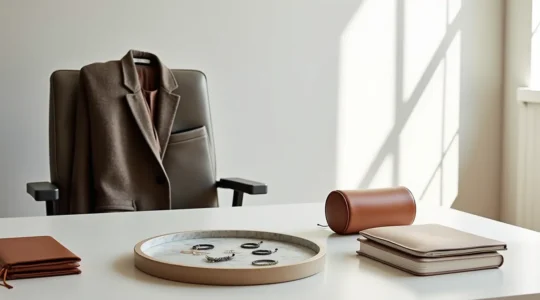
Creating a Personal Style That Balances Professional Credibility and Individuality
True professional style isn’t about expensive clothes, but about architecting a visual message that is both authentic and authoritative. Authenticity outperforms imitation; your style must be an extension of your identity, not a copy of someone else’s. A modular system…
Lire la suite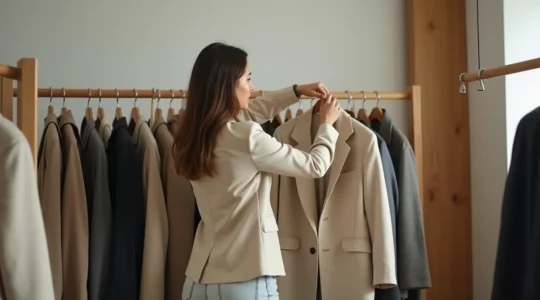
Building a Wardrobe That Authentically Reflects Your Identity and Boosts Confidence
True style isn’t about following trends; it’s about learning the language of self-expression and using your wardrobe to communicate your authentic identity. Psychology shows that what you wear directly impacts your confidence and performance through a process called « enclothed cognition. »…
Lire la suite